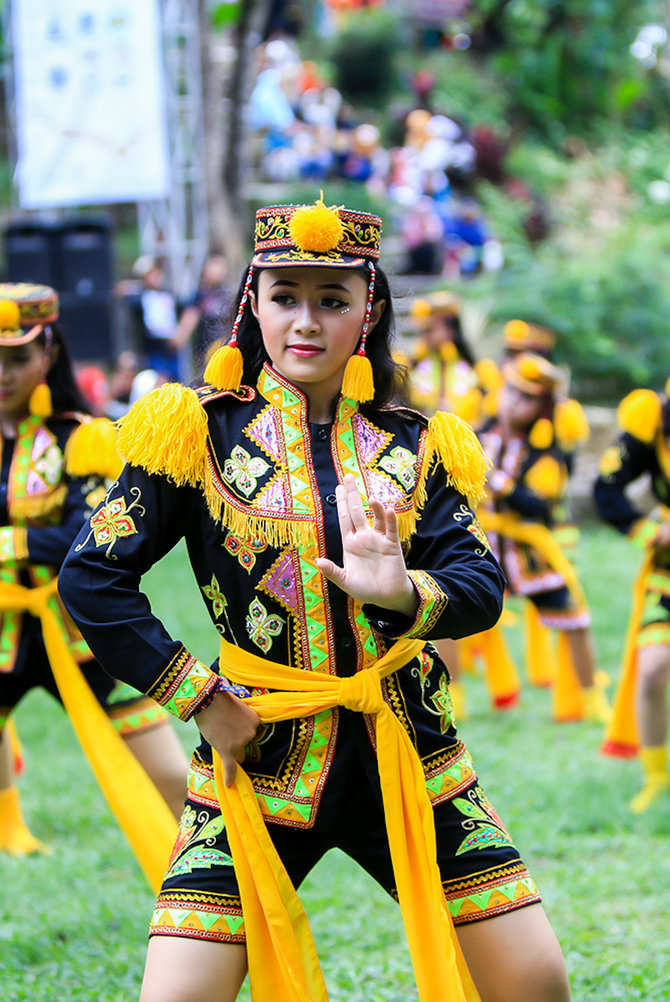
There are so many arts and cultures in Java, but have you ever heard of this one culture, Javanologi Friends? Its name is Angguk Dance, which originates from the Kulon Progo area, the Special Region of Yogyakarta. As the name implies, this dance movement has a head nodding movement accompanied by a graceful dance movement. Before discussing this dance movement more, let’s look at the history of this art first.

Angguk Dance originally came from the Dolalak Dance in Purworejo, which was then brought in and started to develop in Kulon Progo around 1950. This dance is thought to have appeared since the Dutch era as an expression of gratitude to God after the rice harvest. To celebrate, the youths dance and sing while nodding their heads. From there appeared the Angguk Dance. This dance is usually held in the yard and the audience is free of charge.

This dance also has its meaning. As we know, the Angguk Dance was born in Kulon Progo, where the people have livelihoods related to agriculture. In general, agrarian society always asks for salvation from God, this can be seen from the symbols of the typical offerings of agricultural communities. For this reason, before the performance begins, a prayer is said to ask for safety with offering symbols.

Initially, this art was only danced by men, but over time, young women participated in this Angguk dance. This dance is usually three to seven hours long, with folk rhymes containing life advice, manners, and other matters concerning aspects of human life.