Javanese Fashion: Jarik
Hello Javanology Friends!! You must be familiar with the term ‘Jarik’, the word jarik already sounds very familiar in Indonesia, especially on the island of Java. Jarik is a term in Javanese for a cloth that has batik motifs with various patterns. Jarik itself is commonly used by Javanese elders for daily life which is generally used by women. In Javanese, jarik means ‘Don’t be jealous easily’, or in Indonesian it means don’t be jealous easily. This is Javanology friends, when using a finger, someone will walk carefully, women will walk more gracefully and seem gentle when wearing a finger.
In the past, Javanese people used this jarik cloth in their daily life, starting from being used as a subordinate, baby bedding, baby carrying equipment, to mats and cloth coverings for the dead. Not only that, friends of javanology, women who have just given birth are also recommended to use fingers so that their posture is maintained to speed up the recovery process. In ancient times until now, in the villages jarik is used to cover the body from the chest to the knees or calves when they bathe in the river or spring. The word jarik has another meaning in Javanese called telesan or means wet in Indonesian. Jarik has several functions, such as: As an illustration of the level of life and social status. The meaning of jarik with certain motifs will show the social status of the person. Jarik can describe where the person came from, because each region has different characteristics and motifs.
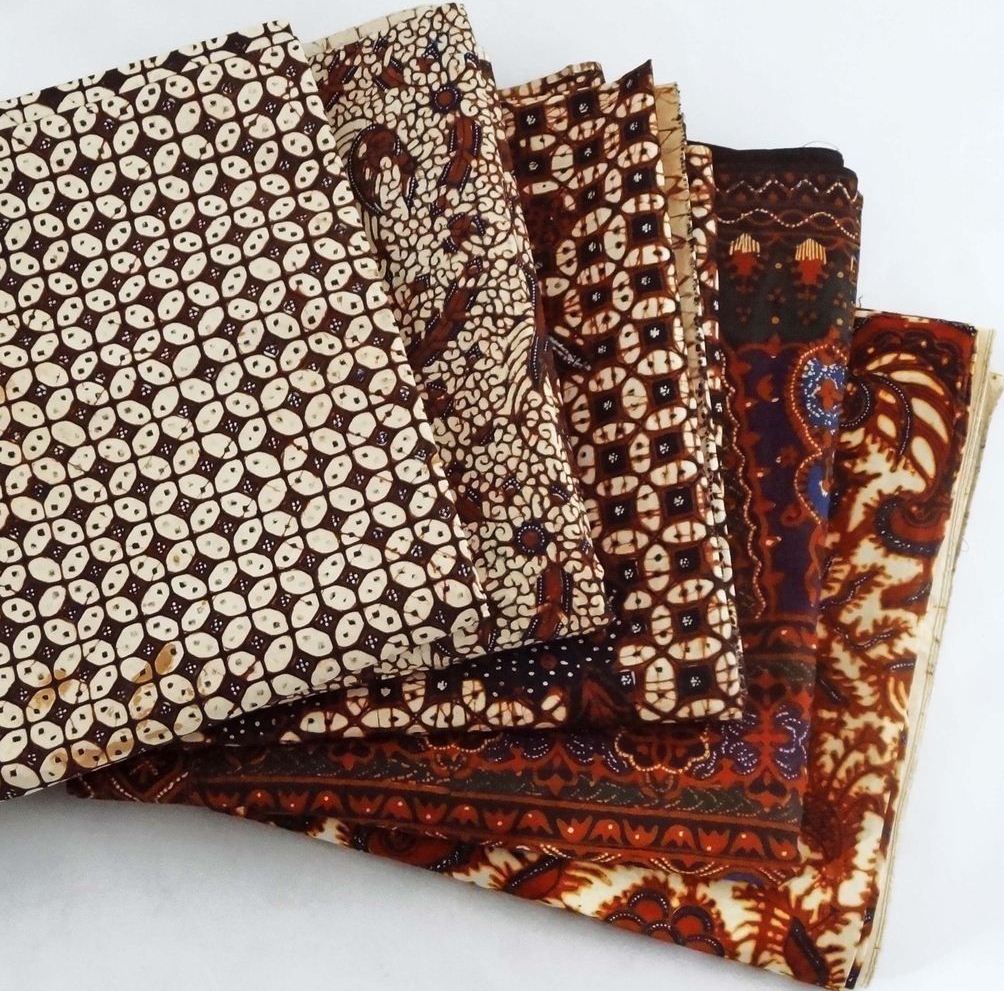
Talking about motifs, Jarik itself has various forms of batik motifs, and each batik motif has a different meaning. The following are examples of motifs that are often used for jarik cloth:
1. Ceplok motif, has many geometric designs based on pictures of circular roses, stars, or other small shapes. Which forms a symmetrical pattern [there is cloth.
2. Solo Slobog motif, has a loose/large meaning.
3. The Semen Gendong motif, the motif of the written jarik cloth that is usually worn by the bride and groom, as a symbol of hope to soon get a dutiful, obedient, and pious child.
4. Truntum motif, has the meaning of a guide, a parent who always guides his child in navigating life.
5. Satrio Manah motif, usually used by the groom at the time of application, hoping that the application can be accepted by the prospective bride and groom.
6. Semen Rante motif, Semen rante is often worn during the application procession. The philosophy of the word rante refers to a strong and strong bond or relationship against all temptations until death do them part.
7. Parang Kusumo motif, this jarik motif is used by the mother of the bride when exchanging rings. The meaning of this motif is that the marriage bond cannot be separated like mimin lan mintuno.
8. Cement motif, Cement-patterned jarik is often used in the daily life of ancient people. This motif has a plant meaning because it is inspired by natural conditions and the environment.
9. Kraton motif, Jarik Kraton has a philosophy about life. In ancient times, this motif was only done by the princesses of the palace and the expert batiks in the palace environment. Even this motif in ancient times was only allowed to be used by the general public.
10. Sudagaran motif, sudagaran batik is a modification of the prohibition motif made by artists from merchants so that it can be used by the general public.
11. Nitik motif, Nitik is one of the oldest jarik motifs. This motif is inspired by patola woven cloth brought by traders from Gujarat India who came to Indonesia. This motif is commonly used by parents at weddings.
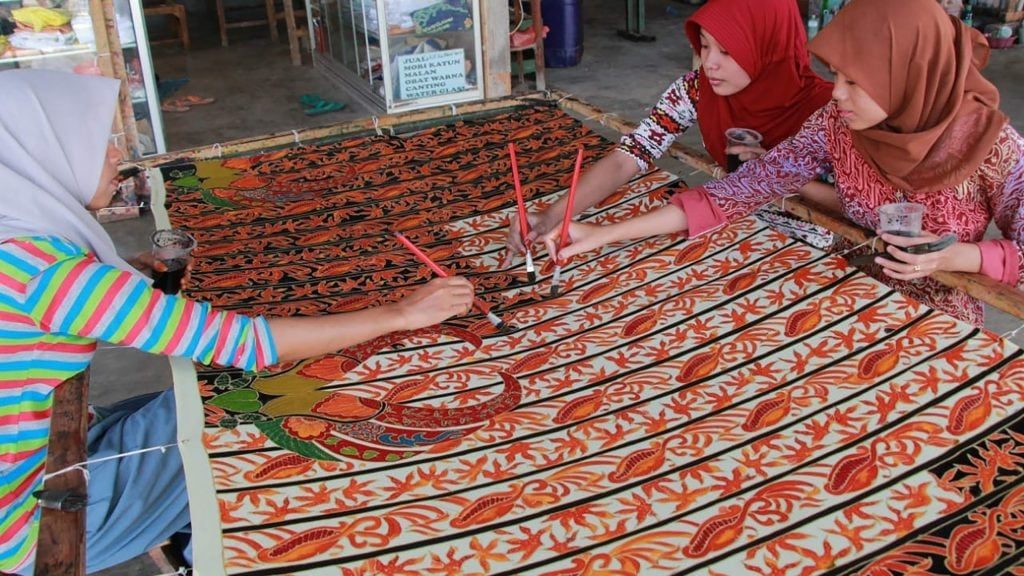
The stages of the finger making process are as follows:
1. Ngloyor or ngemplong, is the process of cleaning mori cloth with hot water that has been mixed with straw or straw. Then the fabric is compacted with fibers.
2. Nyorek or patterning, is the process of making a pattern using a pencil.
3. Batik, after the pattern is formed, it’s time to apply batik wax (night) over the pattern with the help of canting.
4. Nembok, is the process of applying wax to cover parts that should not be exposed to the base color (in this case the color blue). The thick night that sticks to this cloth seems to function as a retaining wall.
5. Medel, dyeing cloth that has been given batik wax into the color according to taste.
6. Ngerok and Nggirah, the next process is to remove the wax from the parts to be colored with a scraper / drawstring.
7. Mbironi, this process is a process of covering the parts that will be left with the basic color of the cloth or white and places where there are spots (dots).
8. Nyoga and Nglorod, is the last process in making jarik motif. That is dipping the cloth into the dye (usually brown) then proceeds to the process of removing the batik wax with boiling water or what is often called nglorod.
9. Washing, the last is to wash the batik cloth with clean water and then dry it.
This long process is one of the reasons why high-quality jarik cloth cannot be obtained at a low price.
Writer:
Mahardika Kurnia Ardhi
Source: